
Remarkable Estimating Blog|Commercial Estimating

Commercial Construction Estimating: A Guide to Accurate Project Pricing

Commercial projects raise the stakes on every part of estimating. Drawings are larger, specifications are longer, more trades are involved, and the bid form often asks for alternates, unit prices and schedules as well as a lump sum. A commercial estimate has to be complete, well organized and defensible line by line.

Related service: commercial construction estimating services.

Remarkable Estimating ServicesAuthor
Published
6 minRead time
Commercial EstimatingCategory
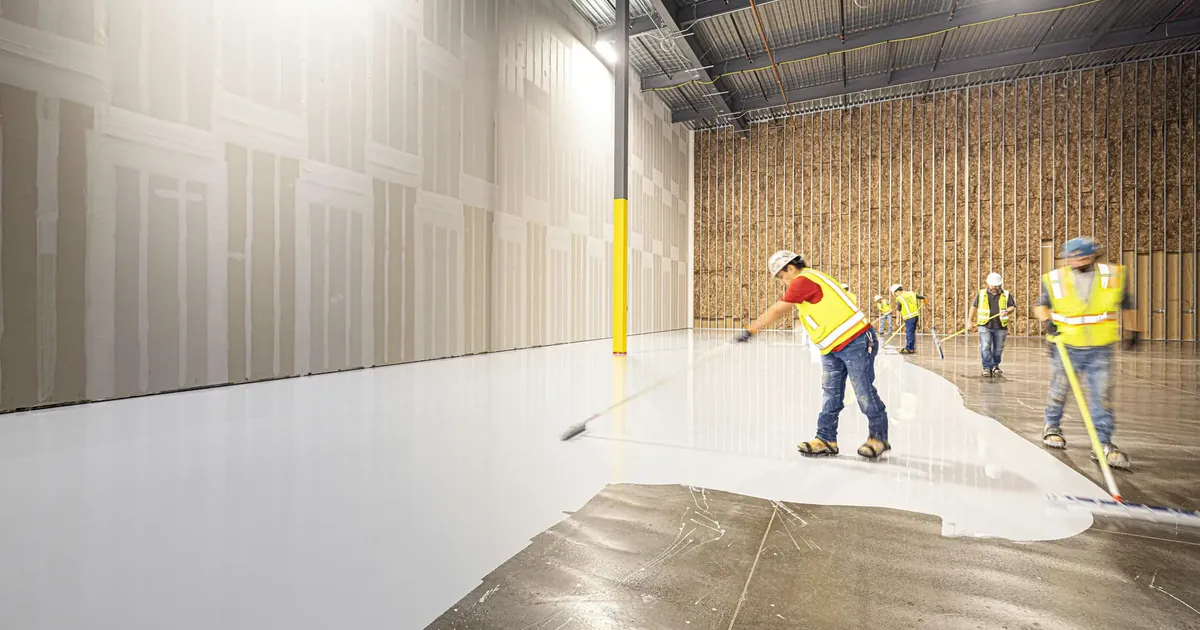
Workers applying a floor coating inside a large commercial building with high ceilings and exposed steel

This guide covers how commercial construction estimates are structured, the cost categories that behave differently from residential work, and the practices that help commercial bids hold up from bid day through buyout.

How Commercial Estimating Differs From Residential

  • Documents are more complete and more demanding. Construction documents are typically accompanied by a full project manual, and the specifications carry as much weight as the drawings.
  • More of the work is subcontracted, which makes scope coverage and quote leveling central to the estimate.
  • Schedules drive cost. General conditions, equipment and supervision scale with duration.
  • Bid forms are structured. Owners may require alternates, unit prices, allowances and breakdowns in specific formats.
  • Public projects add requirements such as bonding, prevailing wages and small-business participation goals.

For a comparison with home building, see our guide to residential construction estimating.

Organizing the Estimate by CSI Division

Most commercial estimates follow CSI MasterFormat, which matches the way specifications are organized. Organizing by division:

  • Makes it easy to check each specification section against the estimate.
  • Allows owners and GCs to compare bids line by line.
  • Lines up with how many contractors track job costs.

Within each division, keep labor, material, equipment and subcontract costs separate. That separation is what lets you test the estimate and reuse it later.

Reading the Project Manual

Commercial specifications often contain requirements that do not appear on any drawing:

  • Division 01 general requirements: submittals, mock-ups, testing and inspection, temporary facilities, cleaning and closeout documents.
  • Quality standards, approved manufacturers and substitution procedures.
  • Warranty requirements that may require manufacturer inspections.
  • Phasing and working-hour restrictions.

Our article on how estimators use plans, specifications and drawings covers what to look for in more detail.

General Conditions: Sized to the Schedule

General conditions are the time-related costs of running the project. On commercial work they can be substantial, so estimate them from the schedule rather than as a flat percentage:

  • Supervision: project manager, superintendent and assistant staff for the duration they are required.
  • Temporary facilities: field office, storage, toilets, fencing, signage and temporary utilities.
  • Site services: dumpsters, cleaning, snow or dust control, security.
  • Equipment shared across trades: hoists, lifts and cranes that no single subcontractor is carrying.
  • Safety: protection, training and required safety staff.
  • Project administration: submittals, closeout documents, as-builts and scheduling.

A schedule extension that adds even a few weeks increases most of these lines, which is why estimating general conditions per week or per month makes them easier to adjust.

Subcontractor Coverage and Bid Leveling

On many commercial bids, subcontracted work makes up most of the total. The estimator's job is to make sure every scope is covered once, and only once.

Build a scope matrix

List each trade scope and the items included in it, then check every quote against the matrix. This quickly exposes gaps (items no one included) and overlaps (items two trades both included).

Level quotes before comparing prices

Put quotes side by side on the same scope. Add a number for anything a bidder excluded, and remove anything they included that belongs elsewhere. The lowest quote is often not the lowest leveled number.

Carry plug numbers carefully

If a trade has no reliable quote by bid day, carry an estimated number based on your own takeoff. That is one reason an independent quantity takeoff for each trade is valuable even when the work will be subcontracted.

Alternates, Unit Prices and Allowances

Commercial bid forms frequently require:

  • Alternates: priced additions or deductions (for example, an upgraded finish or a deferred scope). Price each one independently and state what it includes.
  • Unit prices: per-unit rates for work whose quantity is uncertain, such as rock excavation or unsuitable soil removal. These should reflect realistic productivity, not just material cost.
  • Owner allowances: fixed amounts listed in the specifications. Include them exactly as stated, and confirm whether markup applies.

Errors in alternates can decide a bid when owners select combinations that change the ranking of bidders.

Schedule-Driven and Market-Driven Costs

  • Escalation: if work will be bought months after bid day, consider how material and labor costs may move and whether the contract allows for adjustment.
  • Long-lead items: switchgear, elevators, specialty glazing or fabricated steel may affect both schedule and pricing.
  • Premium time: compressed schedules may require overtime or additional shifts.
  • Occupied buildings: tenant improvements in operating buildings add after-hours work, protection and phasing.

Example: Pricing a Medical Office Tenant Improvement

Consider a hypothetical tenant improvement for a medical office in an existing multi-story building. A complete estimate would include:

  • Selective demolition with disposal routed through a shared freight elevator during limited hours.
  • Partitions including sound-rated walls between exam rooms, with full-height framing where required.
  • Increased plumbing for exam-room sinks, tied into existing risers.
  • Mechanical changes for additional exhaust and zoning.
  • Electrical and low-voltage for exam equipment, nurse call and data.
  • Finishes with specific cleanability requirements from the specifications.
  • General conditions reflecting night work and building-management coordination.

Each of those items shows up somewhere in the drawings or specifications; a commercial estimate needs to find them all.

Industrial and Specialty Commercial Work

Industrial facilities, warehouses and data-intensive buildings add heavy concrete, large mechanical and electrical systems, specialized equipment and often tight owner-driven schedules. The same principles apply (complete scope, organized structure, leveled quotes and schedule-based general conditions) with more emphasis on long-lead equipment and coordination between trades.

From Estimate to Buyout

Winning the bid is the start of another estimating task: buyout. The estimate becomes the budget, and each scope must be bought within it.

  • Convert the estimate into a budget by cost code, with the same structure you will use for job costing.
  • Write subcontract scopes from the scope matrix used for bid leveling, so each subcontract matches what was carried in the bid.
  • Re-level quotes if subcontractors revise pricing after award, and track any buyout savings or overruns against each line.
  • Confirm long-lead purchases early, locking in pricing and delivery for items that affect the schedule.
  • Document scope transfers where an item moves from one trade to another, so it is neither paid twice nor lost.

Well-organized estimates make buyout faster and reveal problems while there is still time to act.

Communicating the Estimate to Owners

On negotiated and design-assist work, the estimate is also a communication tool. Owners want to understand where the money goes and what drives it. Summaries by building system, clear assumptions, and identified options for savings help owners make decisions. A transparent estimate builds trust that carries through the project.

Conclusion

Accurate commercial construction estimating depends on organization as much as arithmetic: follow the specifications division by division, estimate general conditions from the schedule, level every subcontractor quote against a scope matrix, and price alternates and unit prices with the same care as the base bid. Remarkable Estimating Services prepares commercial and industrial estimates from construction documents for general contractors and subcontractors nationwide, with standard delivery in 48–72 hours.

Frequently Asked Questions

What is included in general conditions on a commercial project?
Supervision, temporary facilities and utilities, site services, shared equipment, safety and project administration. These costs scale with the project schedule.
Why are commercial estimates organized by CSI division?
CSI MasterFormat matches how commercial specifications are organized, making it easier to check scope, compare bids and track costs.
How do you level subcontractor bids?
Compare each quote against the same scope matrix, add costs for anything excluded, remove anything outside the scope, and then compare the leveled totals.
Can you estimate only certain trades on a commercial project?
Yes. Remarkable Estimating Services can estimate a full project or selected trades, such as drywall, electrical or mechanical, from your construction documents.

Commercial Estimates Organized the Way You Bid

We prepare commercial takeoffs and cost estimates by CSI division, with alternates and unit prices broken out, so your team can focus on subcontractor coverage and bid strategy.

Mon – Fri, 8:00 AM – 5:00 PM PST · Rush turnaround available

Get a Free Estimate

Send us your plans and we'll come back with a clear scope, a realistic turnaround, and a quote usually within 48–72 hours. Want to see our work first? Ask for a free sample estimate.

Prefer to send plans directly? Email info@remarkableestimating.com or call (424) 441-4101.

Call UsGet a Quote