
Remarkable Estimating Blog|Estimating Accuracy

How Contractors Can Improve the Accuracy of Construction Estimates

Ask ten contractors how accurate their estimates are and most will give you a feeling rather than a figure. That is the real problem. You cannot improve what you do not measure, and most estimating departments never compare what they estimated with what the job actually cost in a way that changes the next bid.

Related service: itemized cost estimates organized for job cost tracking.

Remarkable Estimating ServicesAuthor
Published
6 minRead time
Estimating AccuracyCategory
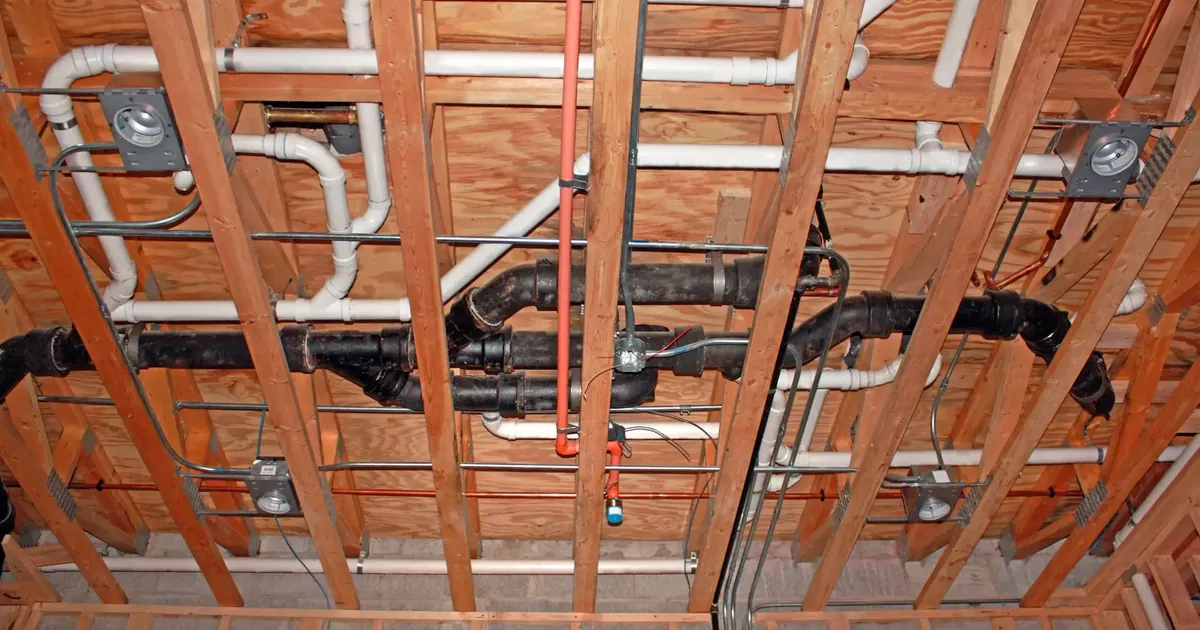
Overhead plumbing and mechanical rough-in with drain, water and vent piping running through ceiling joists

This article is about the systems that make estimates more accurate over time. A single careful estimate is good; a process that makes every estimate better than the last is far more valuable. If you're looking for a checklist to use on bid day, see our pre-bid estimate review checklist.

What "Accurate" Should Mean

Accuracy has two parts, and it helps to separate them:

  • Completeness: did the estimate include everything the job required? Missing scope is the most expensive kind of inaccuracy.
  • Precision: for the scope included, were quantities, productivity and prices close to what actually happened?

An estimate can be precise on everything it includes and still badly wrong because of what it left out. Most improvement efforts should start with completeness.

It also helps to set expectations by estimate type. A conceptual estimate prepared from a sketch cannot be as precise as a detailed bid estimate from construction documents, and it should not be judged as if it were.

Foundation 1: A Consistent Cost Code Structure

Accuracy starts with being able to compare like with like. If the estimate uses one structure and the field tracks costs in another, estimate-versus-actual comparisons are guesswork.

  • Adopt a single cost code structure, often based on CSI MasterFormat divisions, for both estimating and job costing.
  • Keep codes detailed enough to be meaningful (separate labor, material, equipment and subcontract) but not so detailed that field staff stop using them.
  • Train superintendents and foremen on why codes matter, not just how to enter them.

Foundation 2: Tracking Actual Costs Against the Estimate

Once estimate and job cost share a structure, track:

  • Installed quantities, to see whether the takeoff was complete.
  • Labor hours by cost code, to test productivity assumptions.
  • Material costs, including waste and change in price between bid and purchase.
  • Change orders, separated from base scope so they do not distort the comparison.

Labor hours deserve particular attention. They vary more than material costs, and they're where historical data pays off most. Our labor cost estimating guide explains how productivity rates are built.

Foundation 3: Closeout Reviews That Change Something

A closeout review should answer specific questions:

  1. Which cost codes varied most from the estimate, and in which direction?
  2. Was each variance caused by the estimate (a missed quantity, an unrealistic rate) or by the project (a design change, an unusual event)?
  3. What should change in our standard rates, assemblies or checklists as a result?

The third question is the one most often skipped. A review that only produces a report does not improve the next estimate. Update the productivity table, the assembly or the checklist, and date the change.

Foundation 4: Standardized Assemblies

An assembly groups the items that go together into a single unit you can measure once: for example, a specific partition type with studs, track, board on both sides, insulation, taping and finishing. Using standard assemblies:

  • Reduces the chance of forgetting a component.
  • Makes estimates faster and more consistent between estimators.
  • Gives you a single place to update productivity when history shows a change.

Assemblies still need judgment. A standard partition assembly used at a different height or in an occupied building needs adjustment.

Foundation 5: Calibrated Contingency

Contingency is not a fudge factor. It is an allowance for defined risks that cannot yet be priced precisely, such as incomplete design, uncertain existing conditions or volatile material prices.

  • Tie contingency to specific risks and document them in the estimate.
  • Scale it to design completeness: more contingency on schematic drawings, less on complete construction documents.
  • Review how contingency was used at closeout. If it is consistently unused, you may be pricing yourself out of work; if it is consistently exhausted, the underlying estimates need attention.

Foundation 6: Current, Local Pricing

Historical unit costs age quickly when material or labor markets move. Refresh pricing for every bid:

  • Get supplier quotes for volatile or high-value materials.
  • Adjust published cost data for location.
  • Note how long quoted prices are valid, and flag items at risk if purchase will happen well after bid day.

Example: Closing the Loop on a Drywall Line Item

Suppose a hypothetical contractor's estimates for high-ceiling commercial partitions keep running over on labor, although board quantities are consistently right. A closeout review of several jobs shows that installed quantities matched the takeoff, but finishing hours were well above estimate on walls over a certain height, because crews needed lifts and extra passes on the tallest walls.

The fix is specific: add a height adjustment to the finishing labor in the partition assembly and a separate line for lift rental above that height. The next estimates reflect it automatically. That's what estimating accuracy looks like in practice: a small, documented change based on evidence. Our drywall estimating team applies exactly this kind of height and finish-level adjustment.

Practical Habits That Improve Accuracy

  • Read the specifications for every scope, every time.
  • Measure net, then apply waste visibly, so the factor can be adjusted.
  • Separate labor, material and equipment on every line.
  • Document assumptions and clarifications in the estimate itself.
  • Use a second reviewer before submission.
  • Keep a lessons-learned list attached to your estimating checklist.

The Role of Outside Estimators

An independent estimate is a useful benchmark. When your in-house number and an outside number differ significantly, the reasons are almost always informative, pointing to a missed scope, a different productivity assumption or a pricing difference worth investigating. Remarkable Estimating Services prepares itemized estimates organized by CSI division, which makes them easy to compare with your own.

Measuring Estimating Performance

Beyond estimate-versus-actual comparisons on won jobs, a few simple measures show how your estimating is performing:

  • Hit rate: the share of bids you win, tracked by market sector, project size and client. A very high hit rate can mean you are leaving money on the table; a very low one may point to pricing or targeting problems.
  • Bid spread: where bid results are published, how far your number sits from the low bid and the next bidder. Consistently large gaps on one side suggest a systematic difference in scope or pricing.
  • Margin fade or gain: the difference between estimated and final margin on completed jobs, separated into estimate-driven causes and project-driven causes.
  • Change order ratio: how much of a job's final value came from changes, which can indicate unclear documents or scope gaps in the original estimate.

Track these by estimator, sector and project type, and review them quarterly. The aim is not to judge individuals but to find where your process needs attention.

Sharing Knowledge Across the Team

Accuracy suffers when knowledge lives only in one person's head. Keep assemblies, productivity tables, checklists and lessons learned in shared, versioned files, and hold short post-bid discussions on significant wins and losses. New estimators get up to speed faster, and the company keeps its knowledge when people move on.

Conclusion

Accurate estimating is built, not born. Use one cost code structure, track actual costs against it, run closeout reviews that update your standards, use assemblies, calibrate contingency to real risks and keep pricing current. Each step is modest on its own. Together, they make each estimate more reliable than the one before.

Frequently Asked Questions

How accurate should a construction estimate be?
It depends on the estimate type and how complete the design is. Conceptual estimates carry wide ranges; detailed estimates from complete construction documents should be much closer. Judge accuracy against the estimate's purpose.
What is the best way to use historical cost data?
Track actual costs using the same cost codes as your estimates, review variances at closeout, and update productivity rates and assemblies only when variances are consistent across projects.
How much contingency should an estimate include?
Contingency should be tied to specific, documented risks and scaled to design completeness and project uncertainty, rather than applied as a fixed habit.
Why do estimates keep coming in low on labor?
Common causes include productivity rates that do not reflect job conditions (height, access, phasing), non-productive time left out, and rates never updated from field data.

Start With an Estimate Built to Be Measured

Our estimates are itemized by CSI division with separate labor, material and equipment, which makes them easy to load into your job costing and compare against actual results.

Mon – Fri, 8:00 AM – 5:00 PM PST · Rush turnaround available

Get a Free Estimate

Send us your plans and we'll come back with a clear scope, a realistic turnaround, and a quote usually within 48–72 hours. Want to see our work first? Ask for a free sample estimate.

Prefer to send plans directly? Email info@remarkableestimating.com or call (424) 441-4101.

Call UsGet a Quote