Remarkable Estimating Blog|Quantity Takeoffs

How Accurate Quantity Takeoffs Help Contractors Win More Projects

Contractors usually talk about winning work in terms of price, relationships and timing. Underneath all three sits something less visible: the quantity takeoff. If the quantities are wrong, the price is wrong, and it does not matter how sharp your unit costs are.

Related service: quantity takeoff services.

Remarkable Estimating ServicesAuthor
Published
7 minRead time
Quantity TakeoffsCategory
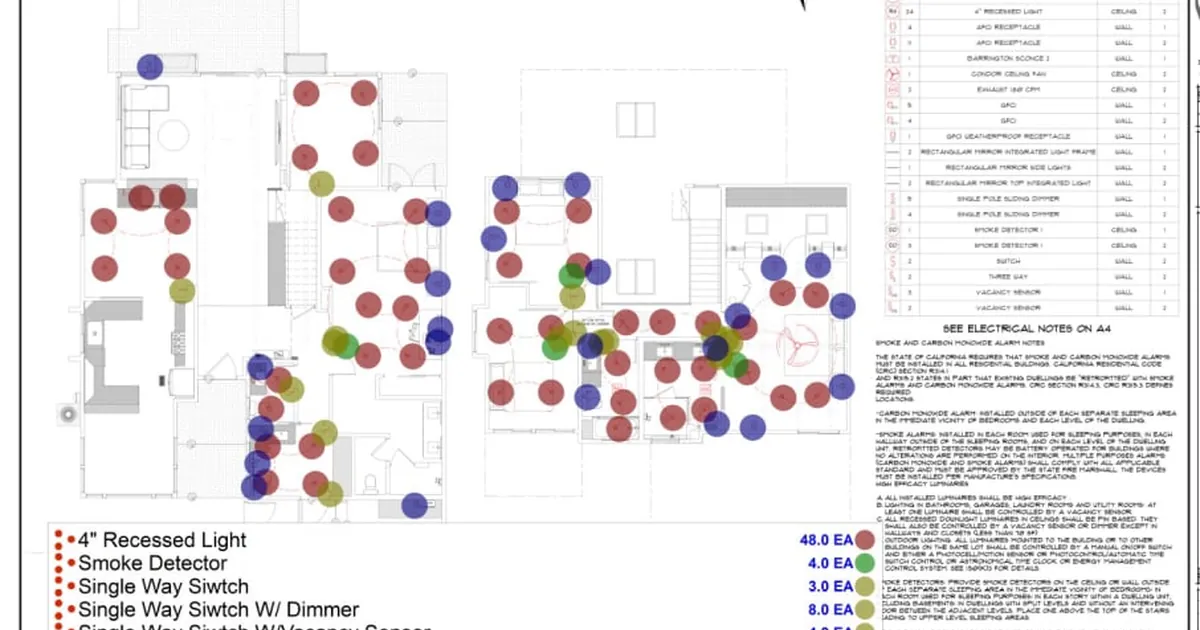
Electrical plan with color-coded count markers for fixtures and devices from a digital takeoff

This article explains how takeoff accuracy connects to your hit rate and your margins, what separates a reliable takeoff from a quick count, and a workflow you can use whether you measure in-house or send drawings to an estimating partner.

What a Quantity Takeoff Is (and Isn't)

A quantity takeoff is the measured list of everything required to build the work shown in the construction documents: linear feet of wall, square feet of drywall and flooring, cubic yards of concrete, counts of doors, fixtures and devices, tons of rebar and so on. It is measured from the drawings and checked against the specifications.

A takeoff is not a price. It does not include labor rates, markups or overhead. That separation is useful: it lets you check the quantities independently of the pricing, and it lets you reprice the same quantities when material costs move. We cover the distinction in more depth in Material Takeoffs vs. Cost Estimates.

Why Takeoff Accuracy Decides Who Wins

Low quantities win the bid and lose the job

If your takeoff misses a wall type, a run of conduit or a second layer of board, your bid will look competitive. You may even win. But the missing quantity does not disappear; it shows up as a cost you absorb during construction. A string of those wins can do more damage than a string of losses.

High quantities quietly lose bids you should have won

Over-measuring is less visible but just as costly. Double-counting overlapping areas, adding waste twice, or measuring to the wrong dimension line all inflate your number. You never find out why the bid was lost; you just see another contractor get the work.

Consistency builds trust with general contractors

Subcontractors whose numbers hold up through buyout and construction become the ones a GC calls first. Clear, well-organized takeoffs make it easy for a GC to compare your scope to the drawings, and that transparency is a competitive advantage in its own right.

What Separates a Reliable Takeoff From a Quick Count

  • Every sheet is reviewed. Details, sections, schedules and enlarged plans often contain items that never appear on the main floor plan.
  • Scale is verified. A single sheet printed or exported at the wrong scale can throw off every measurement on it. Reliable estimators confirm scale against a known dimension before measuring.
  • Items are separated by type. Different wall types, board types, pipe materials or concrete mixes are measured as separate line items rather than lumped together.
  • Waste is applied once, deliberately. Waste and overlap factors are applied at the pricing stage, visibly, not buried inside measured quantities.
  • Assumptions are written down. When the drawings are unclear, the takeoff notes what was assumed so it can be confirmed or corrected.
  • Addenda are incorporated. Revised sheets replace old ones, and changes are tracked.

Digital Takeoff Tools and Why They Help

Digital takeoff software such as PlanSwift, Bluebeam Revu and On-Screen Takeoff changed takeoff work in two important ways. First, measurements are tied visually to the drawing, so anyone reviewing the takeoff can see exactly what was counted. Second, quantities can be grouped and exported by trade, division or area, which makes both pricing and review faster.

The software does not make a takeoff accurate by itself. It measures whatever the estimator clicks on. Judgment about what to measure, how to categorize it and what the specifications require still comes from the person doing the work.

A Takeoff Workflow That Holds Up

  1. Organize the document set. Confirm you have the current sheets and all addenda, and note any missing sheets referenced on others.
  2. Set up the takeoff structure. Create categories that match how you will price the work, by CSI division, by trade, or by building area and phase.
  3. Verify scale on every sheet. Check against a dimensioned element before measuring.
  4. Measure systematically. Work in a fixed order, such as floor by floor, then by system, so nothing is skipped.
  5. Cross-check against schedules. Door, window, finish and fixture schedules should reconcile with your counts.
  6. Review with fresh eyes. A second person compares the marked-up drawings to the quantity list.
  7. Hand off with notes. Pass quantities to pricing along with assumptions, exclusions and RFIs.

Example: A Small Commercial Fit-Out

Picture a hypothetical single-floor clinic fit-out. The floor plan shows partitions, doors and casework. The reflected ceiling plan shows an acoustical grid in most rooms and a gypsum soffit at the reception desk. The finish schedule calls for resilient flooring in exam rooms and tile in restrooms. The wall-type legend shows two partition types: standard and sound-attenuated with insulation to the deck.

A quick count from the floor plan would get the partitions and doors roughly right. A careful takeoff also captures the soffit framing and board from the ceiling plan, splits the flooring by type from the finish schedule, and measures the sound-attenuated walls separately, including their full height to the deck rather than just to the ceiling. Each of those differences changes material and labor, and each is invisible if you only look at one sheet.

Trade-Specific Takeoff Considerations

Every trade has its own traps:

  • Concrete: footings, grade beams and slab thickenings shown in sections rather than on plan. See our concrete estimating service.
  • Drywall: multiple board types, rated assemblies and ceiling heights that change joint and finishing quantities. See drywall estimating.
  • Electrical: device counts, homeruns and branch circuiting that require reading panel schedules alongside plans. See electrical takeoffs.
  • Plumbing: fixture counts are easy; pipe routing, fittings and supports take more work. Our post on how plumbing estimates are built walks through it.

How Outside Takeoff Support Fits In

Many contractors keep estimating in-house but send takeoffs to a partner during busy bid seasons or for trades outside their expertise. That frees senior estimators to focus on pricing, subcontractor coverage and bid strategy. Our earlier article on outsourcing takeoffs to double your bid capacity covers that model.

Remarkable Estimating Services provides takeoffs across all CSI divisions, working from PDF, CAD or Bluebeam files. Standard turnaround is 48–72 hours, and every takeoff is delivered with marked-up drawings so your team can see exactly what was measured.

Takeoffs Beyond Bid Day

A good takeoff keeps earning its keep long after the bid is submitted.

Buyout and purchasing

When you win, the same quantities become the basis of purchase orders and subcontract scopes. If the takeoff is organized by area or phase, material can be ordered in the sequence it will be installed, which reduces storage, handling and waste on site.

Change orders

When the design changes, a takeoff tied to marked-up drawings lets you measure exactly what was added or removed. Owners and general contractors accept change order pricing more readily when it traces back to the same quantities as the original bid.

Progress billing

Schedules of values often follow quantities: square feet of drywall hung, linear feet of pipe installed, tons of steel erected. A reliable takeoff makes it easier to bill accurately and defend percent-complete claims.

Closeout and future bids

Comparing installed quantities with the takeoff at closeout shows whether measurement practices are working. Consistent differences point to a habit worth correcting, such as a detail type that keeps getting missed.

Units, Conventions and Consistency

Many takeoff disagreements are really unit disagreements. Before measuring, settle conventions such as:

  • Whether wall areas are measured one side or both sides.
  • Whether openings below a certain size are deducted.
  • Whether pipe is measured centerline or along the actual run including fittings.
  • Whether concrete is carried in cubic yards net or with an overpour allowance.

Write these conventions into your takeoff template so every estimator measures the same way and every reviewer knows what the numbers mean.

Conclusion

Takeoffs are rarely the part of the bid that anyone celebrates, but they are the part that determines whether a win turns into a profitable job. Reliable takeoffs come from a disciplined process: complete documents, verified scale, separated line items, written assumptions and a second review. Build that into how you work, and your pricing has a solid foundation.

Frequently Asked Questions

How long does a quantity takeoff take?
It depends on the size and complexity of the drawings and the number of trades. Remarkable Estimating Services delivers standard takeoffs in 48–72 hours, with rush turnaround available when bid windows are tight.
Should waste factors be included in the takeoff quantities?
It is clearer to measure net quantities in the takeoff and apply waste at the pricing stage, where the factor is visible and can be adjusted for the specific material and installation method.
What file formats work for a digital takeoff?
PDF drawings are the most common. CAD files and Bluebeam sessions also work well, as long as the sheets are at a verifiable scale.
Can a takeoff be used by more than one trade?
Yes, if it is organized by division or trade. A general contractor can use a full-project takeoff to check subcontractor quotes, while each trade uses its own section for pricing.

Get Takeoffs You Can Bid With Confidence

Our estimators measure every item from your drawings with PlanSwift, Bluebeam and On-Screen Takeoff and deliver organized quantities, marked-up plans and notes on anything the documents leave unclear.

Mon – Fri, 8:00 AM – 5:00 PM PST · Rush turnaround available

Get a Free Estimate

Send us your plans and we'll come back with a clear scope, a realistic turnaround, and a quote usually within 48–72 hours. Want to see our work first? Ask for a free sample estimate.

Prefer to send plans directly? Email info@remarkableestimating.com or call (424) 441-4101.

Call UsGet a Quote