
Remarkable Estimating Blog|Industry Trends

Construction Estimating Trends Contractors Should Know in 2026

Estimating has always meant forecasting, but 2026 has asked more of that forecast than usual. Demand has shifted between market sectors, trade policy has changed material pricing mid-year, and labor availability remains a constraint. This article looks at the trends affecting construction estimates as of September 2026 and what they mean in practice.

Related service: construction cost estimating with current, localized pricing.

Remarkable Estimating ServicesAuthor
Published
6 minRead time
Industry TrendsCategory
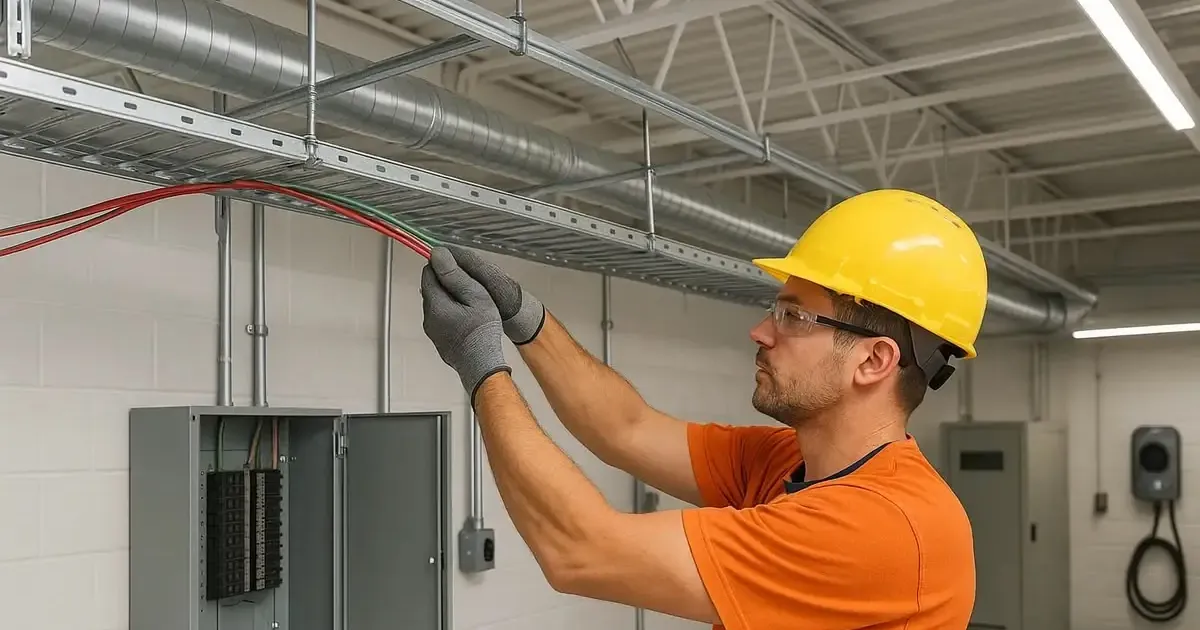
Electrician in a hard hat running cable to an electrical panel in a new commercial building

Where we cite outside data, we link to the source. Market conditions and trade policy can change quickly, so treat anything time-sensitive here as a snapshot and verify current conditions before each bid.

Trend 1: Demand Is Concentrating in Specific Sectors

The Associated General Contractors of America's 2026 outlook, published with Sage in January, described contractor expectations as "dampened" overall, with the notable exception of data centers and power projects, according to the AGC's 2026 outlook announcement. Coverage of the survey reported that contractors expected declines in five of 17 market segments, compared with two a year earlier, and that segments such as data centers, power facilities and health care were expected to drive much of the private market.

What it means for estimating

  • More contractors are pursuing fewer segments. Bidding in growing sectors often means more competition, which puts a premium on accurate, complete estimates rather than aggressive guesses.
  • New project types bring unfamiliar scopes. Firms moving into data center, power or health care work may lack historical cost data for those scopes, increasing the value of detailed takeoffs and independent estimates.
  • Heavier MEP content. Data centers and power projects are dominated by electrical and mechanical systems, where electrical takeoffs and mechanical estimating carry more of the total.

Trend 2: Tariff-Driven Material Pricing

Trade policy has been a major pricing factor for metals-intensive scopes. Section 232 tariffs on steel and aluminum were raised to 50% in June 2025. An April 2, 2026 presidential proclamation restructured those tariffs, applying them to the full customs value of covered steel, aluminum and copper products with tiered rates, as summarized by White & Case. A further proclamation on June 1, 2026 modified parts of that framework, according to a trade-law tracker from Sandler, Travis & Rosenberg.

The AGC survey coverage also noted that contractors reported being affected by tariffs on materials as a new factor in their outlook.

What it means for estimating

  • Unit costs age faster. Steel, aluminum, copper wire and pipe, and products that contain them should be priced from current quotes for each bid.
  • Watch quote validity periods. A price valid for a short window may not survive a long award process.
  • Identify exposed scopes. Structural and miscellaneous steel, curtain wall and storefront, electrical gear and wire, and HVAC equipment are typically the most sensitive.
  • Review escalation language. Where contracts allow it, material escalation clauses can shift some risk; where they do not, contingency should reflect it.

Our steel estimating and detailing guide covers steel-specific pricing considerations in more detail.

Trend 3: Labor Availability and Productivity Assumptions

Labor remains a constraint. Reporting on the AGC/Sage survey noted that around 57% of respondents cited an insufficient supply of workers, that roughly a third of firms reported being affected by immigration enforcement actions in the preceding six months, and that many firms still planned to add staff in 2026.

What it means for estimating

  • Revisit productivity rates. Crews with less experience or higher turnover may not match historical productivity. Compare recent job-cost data with the rates in your estimating database.
  • Price realistic crew mixes. Estimates should reflect the crews you can actually staff, including any need for overtime or additional supervision.
  • Account for schedule risk. Labor shortages can extend durations, which increases time-related general conditions.

Our labor cost estimating guide covers productivity and burden in detail.

Trend 4: AI and Automation Enter the Estimating Workflow

The AGC's announcement noted that firms are increasing investment in artificial intelligence even amid uncertainty. In estimating, current tools use automation for tasks such as recognizing symbols and counting items on drawings, comparing drawing revisions, and organizing documents.

What it means for estimating

  • Automation speeds up repetitive measurement, but results still need review. Automated counts can miss items shown in unusual ways or double-count overlapping symbols.
  • Judgment is still the core skill. Scope interpretation, productivity assumptions, subcontractor leveling and risk pricing depend on experienced estimators.
  • Document review gets faster. Revision comparison tools help catch changes between addenda, one of the most common sources of missed scope.

Trend 5: Uncertainty Makes Documentation More Valuable

With demand shifting, prices changing and labor constrained, owners and general contractors are paying close attention to how numbers are built. Estimates that clearly separate quantities, labor, material and equipment, state assumptions and note pricing dates are easier to review, easier to update, and easier to defend.

What it means for estimating

  • State the pricing basis (date and source) for volatile materials.
  • List exclusions and assumptions clearly in the qualifications.
  • Keep the takeoff separate from pricing, so you can reprice quickly if the market moves. We explain why in Material Takeoffs vs. Cost Estimates.

Example: Repricing a Bid After a Delay

Consider a hypothetical light-industrial project bid in spring and re-issued for pricing months later after an owner financing delay. A contractor who kept the takeoff organized separately from pricing can update steel, electrical and mechanical material costs from new quotes, adjust general conditions for a revised schedule, and review labor rates, without re-measuring the drawings. A contractor whose quantities are buried inside a lump-sum spreadsheet has to start over.

Practical Checklist for Estimating in 2026

  1. Get current quotes for metals-intensive materials on every bid.
  2. Record the pricing date and quote validity in the estimate.
  3. Compare productivity assumptions with recent job-cost data.
  4. Size general conditions from a realistic schedule.
  5. Review contract escalation provisions before setting contingency.
  6. Keep takeoffs reusable for repricing.
  7. Review automated takeoff results before relying on them.

Communicating Market Risk to Owners and General Contractors

In a year of changing prices, how you communicate risk matters as much as how you price it:

  • Be explicit about what is firm. State which prices are based on firm quotes and for how long.
  • Separate escalation from contingency. Owners understand a clearly labeled material escalation allowance better than an unexplained increase in overall contingency.
  • Offer options. Alternate materials or systems with different price exposure give owners choices rather than just a higher number.
  • Propose pricing mechanisms where appropriate, such as escalation clauses tied to a published index or a defined repricing date, when the contract allows.
  • Update promptly. If pricing changes significantly between bid and award, share revised pricing early and with documentation.

Clear communication does not remove market risk, but it prevents that risk from turning into disputes.

Conclusion

The 2026 market rewards contractors who estimate carefully: demand is concentrated in fewer sectors, material pricing is sensitive to trade policy, and labor availability affects productivity and schedules. None of these trends changes the fundamentals of estimating, but they raise the cost of shortcuts. Remarkable Estimating Services prepares estimates with localized, current pricing and clearly stated assumptions for contractors across all 50 states.

Frequently Asked Questions

How are tariffs affecting construction estimates in 2026?
Tariffs on steel, aluminum and copper products have made metals-intensive materials more price-sensitive, so estimators should use current quotes, note quote validity and review escalation provisions. Trade policy has changed during the year, so verify current rules before each bid.
Which construction sectors are growing in 2026?
According to the AGC/Sage 2026 outlook, contractors were most optimistic about data centers and power projects, with health care also cited as a driver of private demand.
Can AI replace construction estimators?
Current tools can automate parts of takeoff and document review, but scope interpretation, pricing judgment and risk assessment still require experienced estimators, and automated results need review.
How often should I update material prices in my estimates?
For volatile materials, update pricing on every bid using current supplier quotes, and record the date and validity of each quote.

Current Pricing for a Changing Market

Our estimates use localized, current pricing and clearly note assumptions about material costs, so you can see exactly what your number depends on. Send your drawings for a quote.

Mon – Fri, 8:00 AM – 5:00 PM PST · Rush turnaround available

Get a Free Estimate

Send us your plans and we'll come back with a clear scope, a realistic turnaround, and a quote usually within 48–72 hours. Want to see our work first? Ask for a free sample estimate.

Prefer to send plans directly? Email info@remarkableestimating.com or call (424) 441-4101.

Call UsGet a Quote